EC 270 - 2026-09-17 - Class - Ch. 03 - Preferences
EC 270 - Thu Sep 17, 2026 - Lecture 03
Auto notes land here once transcribed: EC 270 - 2026-09-17 - Lecture 03
Before class
- Two consumption bundles
and is strictly preferred - ~ is indifferent
is weakly prefer
If
AXIOMS OF CONSUMER THEORY
Completeness: We assume any two bundles can be compared. So,
Reflexivity: We assume any bundle is at least good as itself:
Transitivity: If the consumer thinks that X is at least as good as Y and that Y is at least as good as Z, then the consumer thinks that X is at least as good as Z.
In class
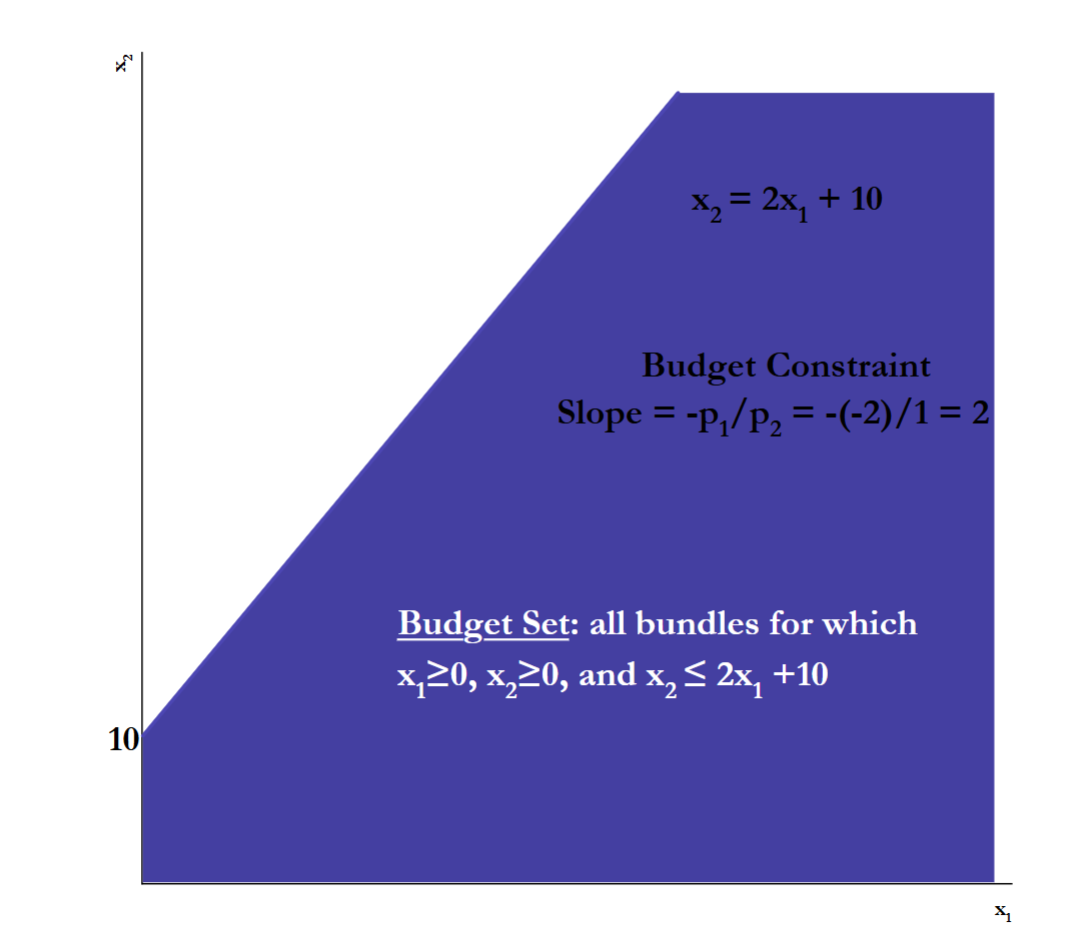
Negative price
- When you have to be paid for consuming something because you dislike it so much or you generate income by consuming more of it
If
After rearranging:
Slope
On to chapter 3 - preferences
- We start by assuming that any decision maker (any person) always chooses its most preferred alternative from its set of available alternatives (basically somebody will always pick their favorite choice among every option)
- Consider two consumption bundles
and - How do consumers rank bundle
and based on their preferences - Strict preference:
is more preferred than - Consumer wants
rather than
- Indifference:
is exactly as preferred as - Weak preference: X
- Strict preference:
Indifference Curves
-
Assume a reference bundle
-
An indifference curve represents the set of all equally preferred consumption bundles to
-
Think of it as an "indifference set" not curve because it's not always a curve
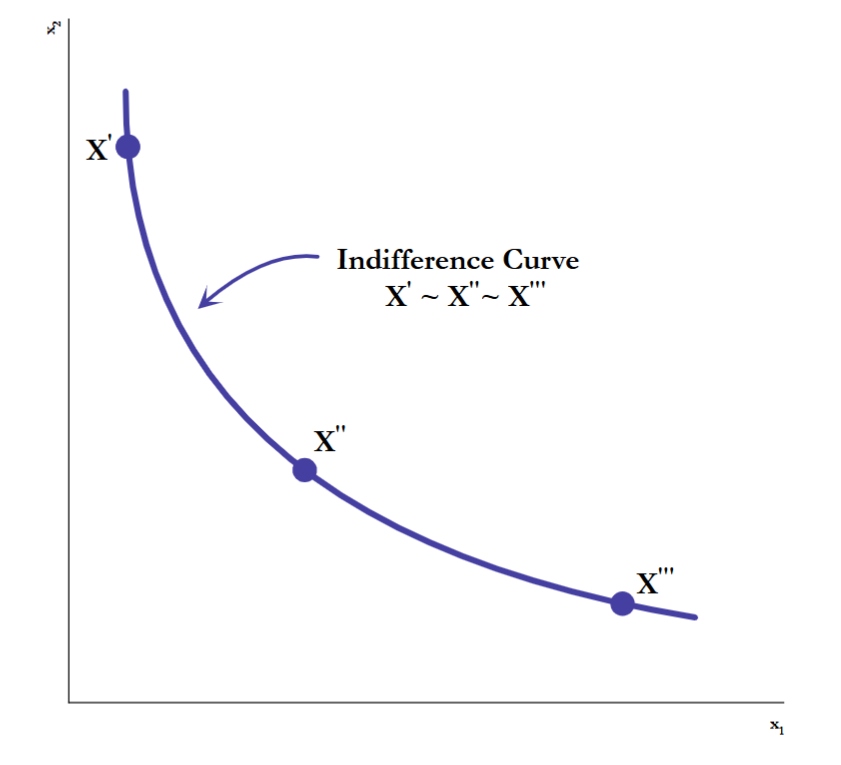
In this case, all 3 bundles are indifferent to each other -
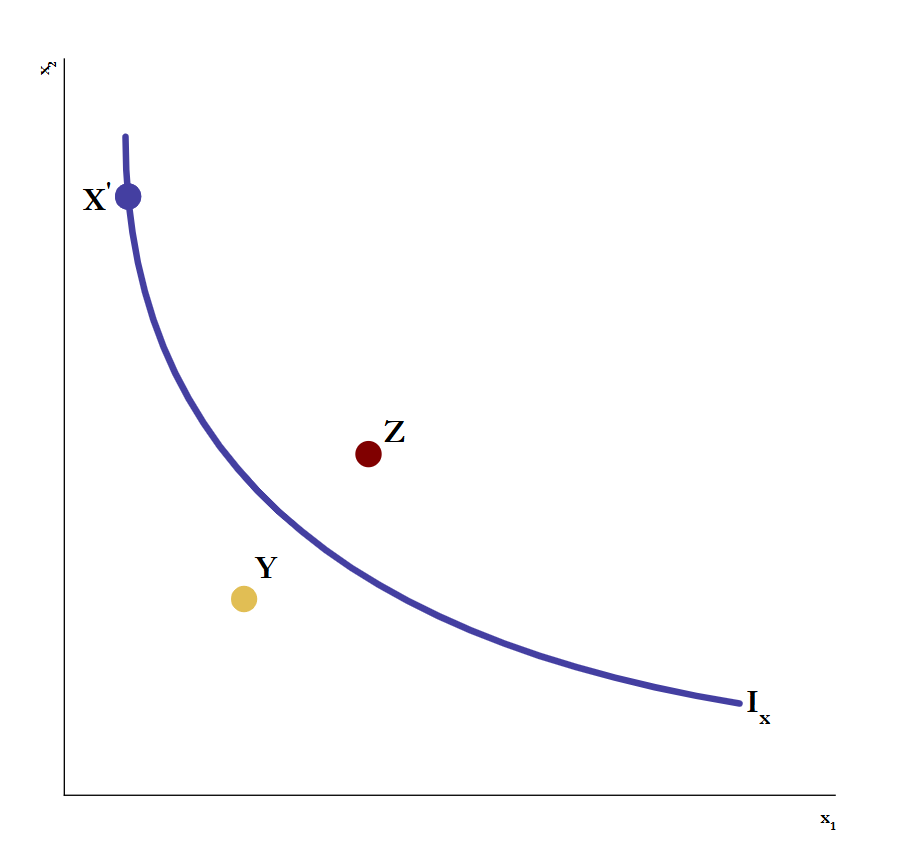
Further, we can rank other consumption bundles relative to an indifferent bundle. For example:
-
Then,
-
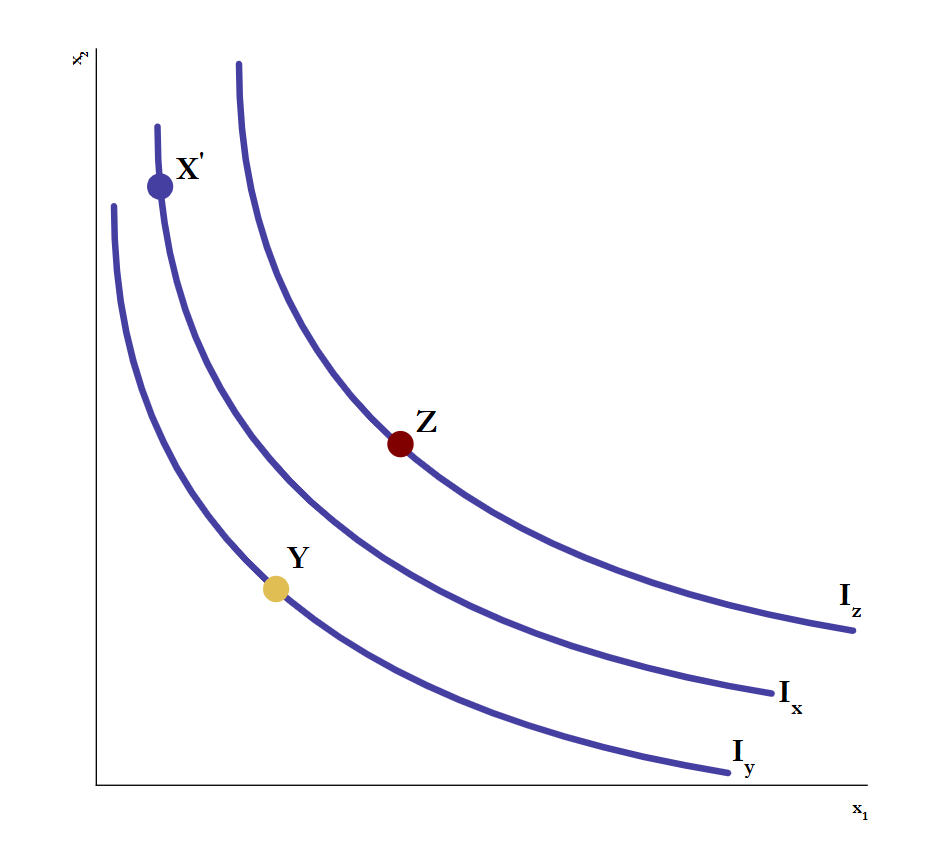
Now take that for all indifference curves for each bundle:
-
-
All bundles in
are strictly preferred to all bundles in . And all bundles in are strictly preferred to all bundles in . -
There's an infinite amount of indifference curves for any given consumption bundle
.
Weakly preferred sets
Any bundle on or above
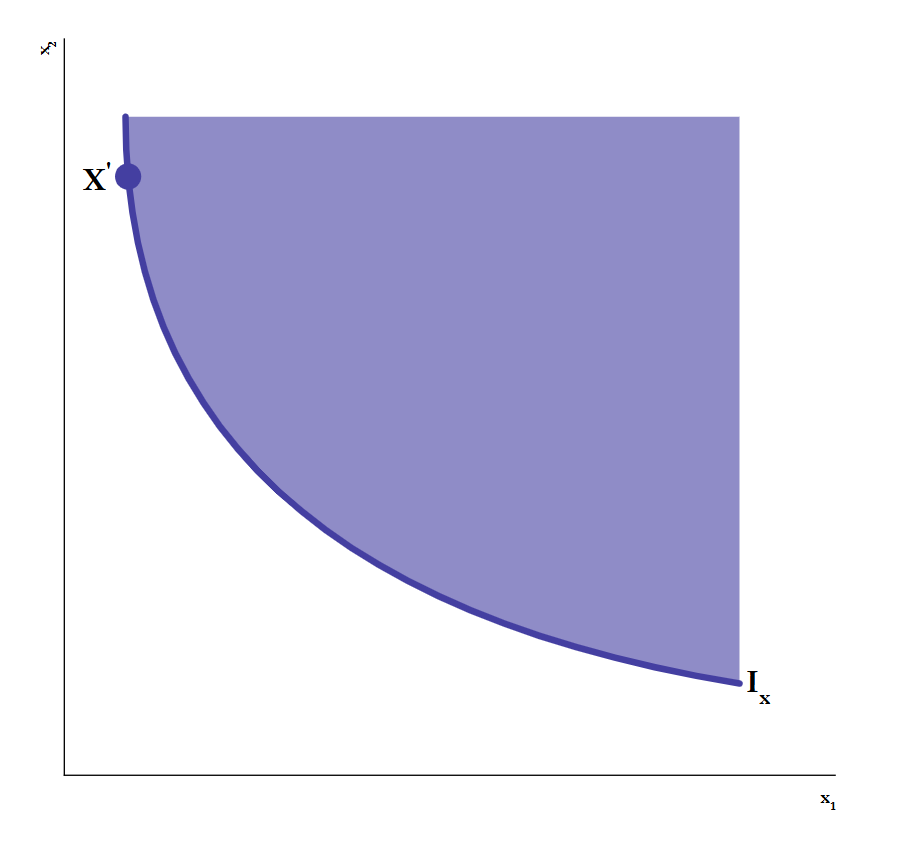
Strictly preferred sets
Any bundle above the indifference curve
Indifference curves can not intersect
Here is how we prove it. Consider this graph: 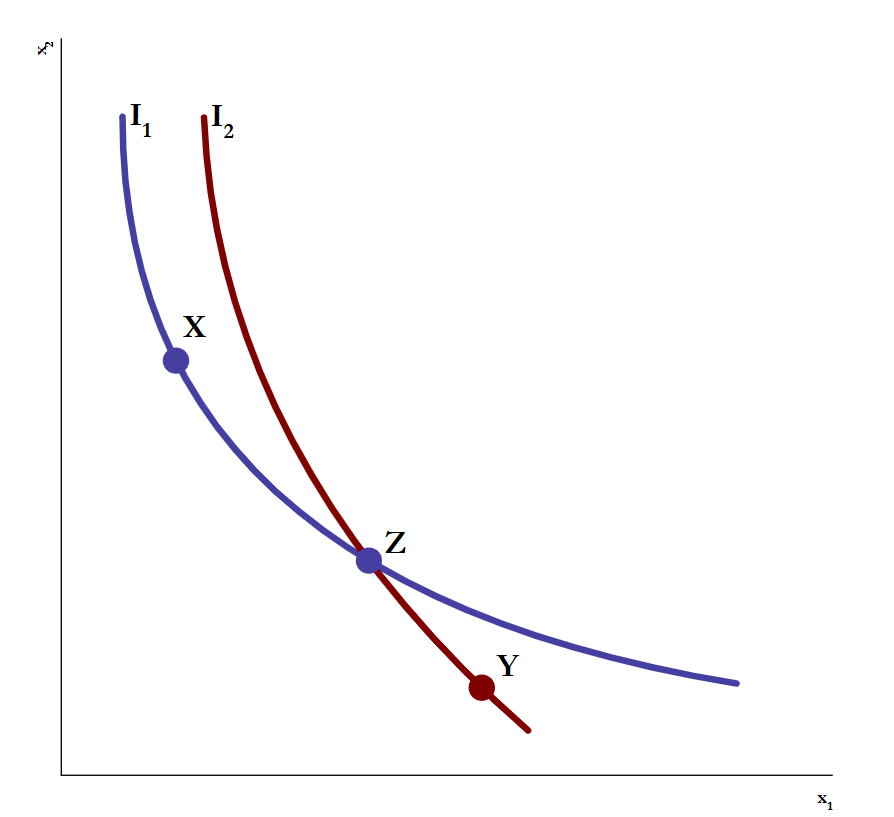
By definition, since they lie on the same indifference curve,
- Indifference curves representing distinct levels of preference cannot cross
A "Good" Commoditiy
- When more of a commodity is always preferred, the commodity is considered a "good"
- If every commodity is a ‘good’ then indifference curves have a negative slope
A "Bad" Commodity
- When less of a commodity is always preferred, the commodity is considered a "bad"
- If we have one good and one bad then indifference curves have a positive slope