BUS 121W - Week 1
Class 1 - Jan. 6, 2026
Introduction
- Professor Leanna Hagarty - call her whatever
- Used a landline in university lol
- Silly picture of her
- Has a BBA and M Ed (from WLU).
- Worked in commercial banking for 9 years
- Has spent 25 years teaching at WLU
- She's an entrepreneur
- Footwear space (Red Wing Shoes)
- Wife, mother, daughter, sister, dog lover, yoga enthusiast, curler (basically just drinks), and avid sports fan
- Email: [email protected]
- Office hours (LH4072)
- Tuesday 2:45 to 3:45
- Wednesday 3:30 to 4:30
Why BU121?
- Basically setting the groundwork of competencies for graduates at WLU
Rest of it is just syllabus stuff.
Class 2 - Jan. 8, 2026
Three elements of university education
This was created by another author of a textbook.
- Foundational knowledge
- The things we know
- Most people think about this when they think about what they do at university
- On it's own, it is useless
- Foundational knowledge + Universal skills
- So we know how to do things with the things we know
- Critical thinking skills, communication skills
- Foundational knowledge + Universal skills + Personal characteristics
- Differentiate being able to do things with the things we know
- They are more innate than universal skills (present from birth, natural)
Laurier Competency Framework
Functional Knowledge
- Critical thinking theory
- Implications of Using Gen AI
- Written & Oral communication methods
- Teamwork & feedback theories
- ESG (Environmental, social, and governance goals)
Universal skills
- Critical thinking
- One of the most lacking in today's society
- Communication
- Digital literacy
- Collaboration and teamwork
- Work effectively with others for greater team success by contributing, leading, teaching, motivating and encouraging others
- Develop mutually-beneficial relationships by co-operating with others and managing conflict constructively
- Leadership
Problem solving- WE DON'T TALK ABOUT THIS IN THIS COURSE SPECIFICALLY
Creativity and innovation- WE DON'T TALK ABOUT THIS IN THIS COURSE SPECIFICALLY
Personal characteristics
- Self awareness
- Adaptability and resiliency
- Reflect and take action when there is adversity
- Improvise and demonstrate flexibility in order to move forward
- This is very important in today's society especially with how quickly things are constantly changing
- Diversity and intercultural Understanding
- Professional attributes
Self-Awareness - Example
Ethan is a new business intern at a marketing firm. He's enthusiastic and extremely driven. When projects go well, he's upbeat and chatty, but when thet don't, he becomes negative and unfairly impatient with peers. Team members have started avoiding him on stressful days because his mood brings down the group.
Ethan also believes he's "good at everything" and doesn't seek feedback. When his supervisor gently points out that his report writing needs improvement, he dismisses it, saying, "I'm just more of a big-picture guy."
Things about him:
- Bad score for self-awareness, doesn't realize his fall comings
- Doesn't even look for advice on how to improve
- Doesn't realize how his mood or mannerisms impact others
How he could improve:
- Practice regular reflection
- Could start journaling
- Seek out feedback
- Especially if you feel like you need to work on self-awareness
- "How does my mood affect you?"
Adaptability and Resiliency - Example #1
All first round picks:
- Caitlin Clark
- She had amazing college numbers
- Won many awards
- She used to have 28.4 PTS / Game but in WNBA has 16.5 PTS / Game
- Vladimir Guerrero Jr.
- In the minors was amazing but in his first couple years wasn't truly incredible and a star.
- He has adapted and fought through adversity, leading his team to the World Series in 2025,
- Connor Bedard
- Absolutely lit it up in the minors, was amazing
- In first year had to adjust to many new things, especially coming into a new league as a young guy
What are the takeaways:
- Accept that change will be required
- Especially when you aren't performing like you did in high school
- Be open-minded and recognize new situations often require new approaches
Adaptability and Resiliency - Example #2
Your roommate storms into your residence, absolutely livid. When you ask what's going on, she yells "My Sociology prof only gave me a 58% on my essay! I spent 8 days working on it! There's no way I deserve that grade! This is just wrong - I'm asking for a regrade."
What is going on with her:
- Has a close mind in the sense that she thinks her work is perfect and in the moment is frustrated. She can't see in a clear mind that maybe she didn't meet the expectations, or meet a deliverable.
- Grade doesn't match how much time she spent on it but time is not the only thing that leads to success.
What to do instead:
- Own that grade and take accountability for it
- It can be easy to point the finger at the marker or prof but sometimes you have to step back and think "Did I study hard enough?"
- Remember that grades reflect performance
Adaptability and Resiliency - Growth Mindset vs. Fixed Mindset
Growth Mindset:
- Learning is hard, it takes time and effort and there may be failures
- "I am capable of learning new things"
- "A challenge is a good thing"
- "I can learn from my failures, they are an opportunity to grow"
- "Feedback is constructive and helps me improve"
Fixed Mindset:
- Believes skills are static
- "If I'm not very good at something, I won't be able to learn how to do it"
- "I'm not comfortable with new things, or challenges"
- "I already know what I fail at"
- "Feedback is personal"
- "My talents/abilities are fixed"
What to do:
- There will be many times that you want to use a growth mindset but it can be very difficult. Just remember the word "yet". "I can't do this, yet*".
- Exercise GRIT
- persevere
- feel disappointed if things don't go well but then move on
- Even the best tennis players in the world lose
45% of points in their career. You have to push through and keep playing
Leadership - Harry Potter example
Who among these characters is the best leader? Why?
- Hermione Granger will always put herself in a situation where she's giving advice to her friends, taking initiative to help and solve problems. She's also pretty smart
- Draco - he's good at grouping people together
Which of the other competencies does strong leadership require?
- Collaboration and teamwork
- Communication
- Self-awareness
- Problem solving
- Creativity
Diversity and Intercultural Understanding - Caterpillar Video
- Build awareness of privilege
- People have lots of implicit privilege that we don't even realize
- Be empathetic to the unique experiences and perspectives of others
- For example, if you have never experienced anxiety, you can't understand how incredibly difficult it is to do simple things
- Act to include others
- They don't have to be big actions
Professional Attributes
- Responsible behaviours
- Professionalism & Respect
- Treat your role as a student like a job
- Show up to class like it's your job
- Treat going to a lab like a job
- Using professional language in communications
- Understanding how to communicate with different people in different language or mediums
- Respect that rules and policies in a large organization promote fairness and consistency
- Exceptions are NOT the norm for large organizations
- Don't email your prof asking for a way to bump up your grade
- Exceptions are NOT the norm for large organizations
- Academic integrity
- Why does it matter?
- Because all stakeholders want their degree to have value
- What is it?
- How to uphold it?
- Understand thoroughly what it is
- Remember why you're here, why you want the degree to have value
- Take pride in upholding the academic honour code
- If you're the only person upholding it and everyone is bringing it down, that's not good
- Why does it matter?
- Independence
- Be independent. Before university, teachers and parents were big drivers of your success, always checking on you.
- Read syllabus and instructions thoroughly & regularly, use the Weekly Checklist, rely on facts instead of rumors
- Use resources - don't do it alone - proactively use resources like Student Success, Writing Services, office hours, Wellness Services
- Proactively monitor your own learning and progress
- Be independent. Before university, teachers and parents were big drivers of your success, always checking on you.
- Professionalism & Respect
- Time management
- Balance

- Balance
- Work ethic
- Engage in productive struggle
- Could be motivated by getting a good grade
- Could be motivated by the bigger why of why you're here
- Engage in lectures and lab activities
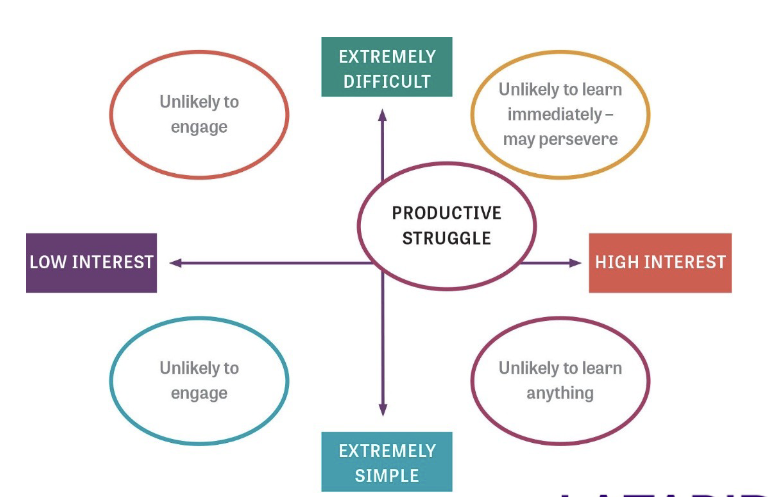
- Remember: learning is supposed to be hard
How to engage in PRODUCTIVE STRUGGLE? - Must prepare
- Be physically present
- Show up mentally (this is the biggest gap)
- Similar to weightlifting - if you only lift small weights, you won't progress, if you straight up lift big weights, you will hurt yourself and/or not progress
- Must apply all of these on a regular basis
- It's not just about willpower and grit
- Where you sit in the classroom is a big proponent
- Engage in productive struggle
- Positive attitude
- Curiosity & Open-mindedness
- "show interest in others' perspectives, new ideas, different approaches"
- Pay attention to current events
- Gratitude
- Replace "I have to do this" with "I get to do this"
- Personal progress
- "I earned a GPA of 8 in first year, and aim for 9 in second year"
- Curiosity & Open-mindedness